20th January 2026
Container Loading with Slip Sheets
Index
What Are Slip Sheets and Why Are They Used in Container Loading?
Advantages of Using Slip Sheets in International Logistics
How to Load a Container Using Slip Sheets
What Are Slip Sheets and Why Are They Used in Container Loading?
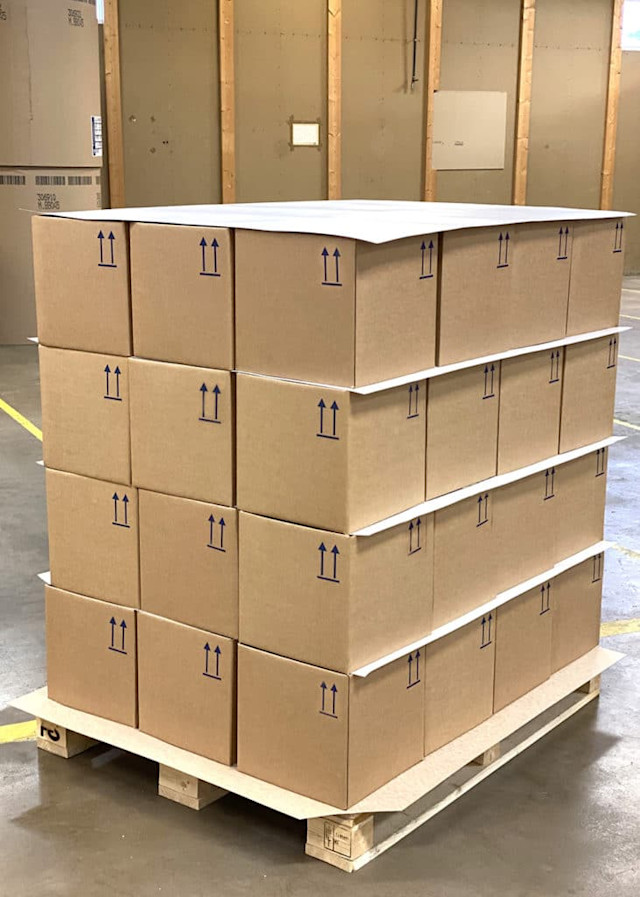
Slip sheets are thin, durable sheets made of pressed cardboard, plastic, or fiber, used as an alternative to traditional pallets for moving goods inside containers. This method optimizes available space and reduces logistics costs by eliminating the need for wooden or plastic pallets.
Why Are They Used?
Increased Load Capacity
→ Without pallets, more space is available inside the container, allowing for higher cargo volume.
Weight Reduction
→ Slip sheets weigh significantly less than pallets, reducing overall shipment weight and optimizing transportation costs.
Environmental Sustainability
→ Made from recyclable materials, slip sheets are an eco-friendly alternative to wooden pallets.
Easy Handling
→ With specialized equipment like the push-pull attachment mounted on forklifts, loading and unloading become fast and efficient.
The use of slip sheets is particularly widespread in international trade and industries such as food, pharmaceuticals, and manufacturing, where space optimization and cost reduction are key factors.
Advantages of Using Slip Sheets in International Logistics
Adopting slip sheet container loading offers numerous benefits for businesses and the entire supply chain.
Key Benefits:
Maximization of Container Space
Removing pallets allows for full utilization of every available centimeter, minimizing wasted space.
More product units can be loaded compared to a traditional pallet system.
Lower Logistics Costs
Less weight means lower transportation costs, especially for ocean and air freight.
Reduced expenses related to pallet purchase, disposal, and return management.
Improved Hygiene and Compliance
Slip sheets eliminate contamination risks associated with wooden pallets, which can develop mold or harbor pests.
They comply with international food and pharmaceutical safety standards, such as IFS and HACCP.
Environmental Sustainability
Recyclable and biodegradable materials reduce the environmental impact compared to traditional pallets.
Lower carbon footprint due to more efficient transportation.
Thanks to these benefits, slip sheets are becoming increasingly common in intercontinental shipping and high-volume logistics.
How to Load a Container Using Slip Sheets
Loading with slip sheets requires specific equipment and careful cargo handling.
Main Steps of Container Loading with Slip Sheets:
Product Preparation
Products are stacked directly on slip sheets without pallets.
The load is stabilized using wrapping or strapping systems to prevent shifting during transit.
Using the Push-Pull System
A push-pull attachment mounted on a forklift grabs the edge of the slip sheet and pulls the load into the container.
This technology enables precise cargo positioning without the need for pallets.
Optimizing Space in the Container
Cargo is arranged compactly, maximizing available space.
If necessary, additional securing systems are used to ensure stability during transport.
Unloading the Container
Upon arrival, cargo is removed with a push-pull attachment and moved to storage or distribution areas.
In many cases, slip sheets can be recycled or easily disposed of, reducing logistics waste.
FAQs
Which industries use slip sheet loading?
Slip sheets are widely used in the food, pharmaceutical, chemical, and industrial sectors, where space optimization and cargo security are critical.
What equipment is needed for slip sheet loading?
A forklift with a push-pull attachment is essential, allowing operators to grip and move load units without pallets.
Are slip sheets reusable?
It depends on the material: plastic slip sheets can be reused multiple times, while pressed cardboard slip sheets are generally single-use but recyclable.
Slip sheet container loading is an innovative and cost-effective solution for international logistics, providing efficiency, sustainability, and cost reduction.
By optimizing space and reducing transportation weight, this technology is rapidly gaining popularity among companies looking to enhance operational efficiency and minimize environmental impact.
Find out how to optimize your international shipments with slip sheets! Contact us at: Unifreddo.it